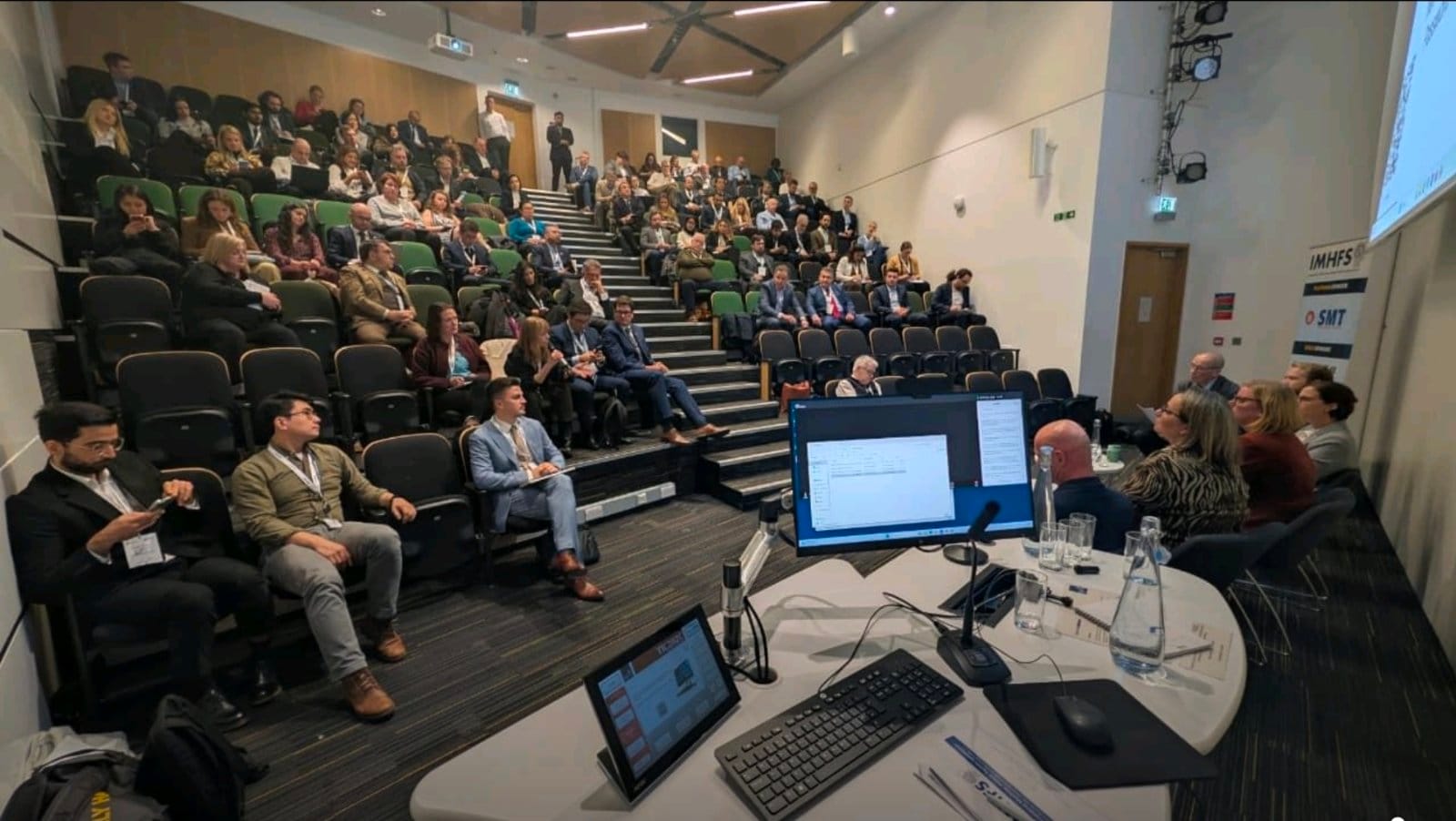
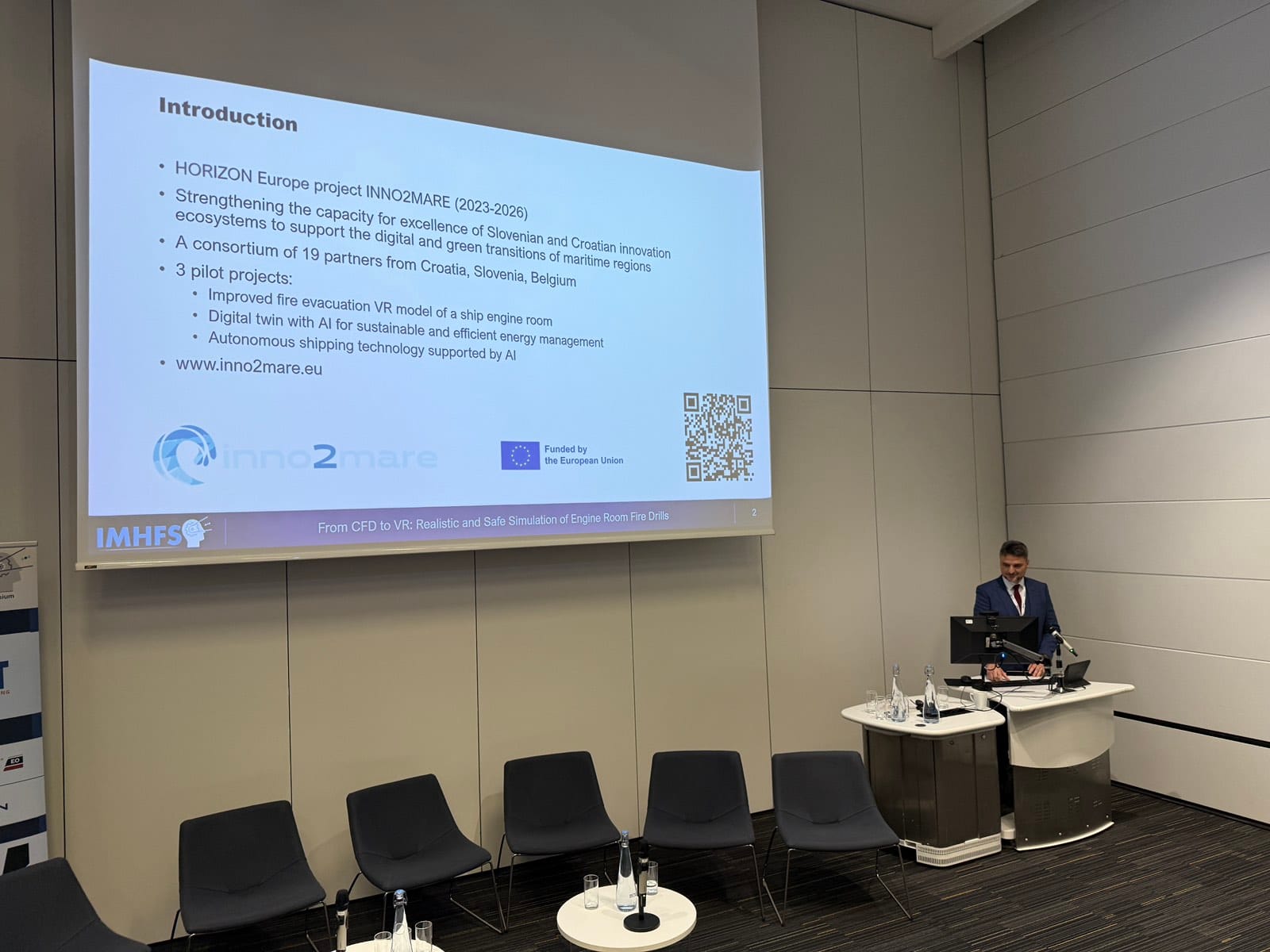
Goran Vizentin and Darko Glujić recently presented the results of Pilot Project 1 at the International Maritime Human Factors Symposium (IMHFS), held in Glasgow, Scotland. Their presentation focused on the innovative use of computational fluid dynamics (CFD) simulations of fire behavior, which were integrated into a virtual reality (VR) environment of a ship’s engine room. This approach aims to enhance maritime firefighting training by providing realistic, immersive, and safe scenarios for crew members.
The International Maritime Human Factors Symposium is an annual event that gathers experts from academia, industry, and regulatory organizations to share research, innovations, and best practices aimed at enhancing maritime safety and operational performance. Presentations at the symposium cover a wide range of topics, from human factors and ergonomics to digital technologies and emergency preparedness.
During their talk, Goran and Darko highlighted the potential of digital tools in transforming traditional maritime training. Their work demonstrates how combining CFD simulations with VR technology can create interactive training modules that are not only safe but also highly realistic, providing trainees with critical experience in responding to emergencies. The presentation received positive feedback from participants, emphasizing the growing interest in integrating digital solutions into maritime operations and safety training.
The INNO2MARE project continues to explore innovative ways to leverage digitalization for maritime education and safety, and the successful presentation of Pilot Project 1 at IMHFS marks an important milestone in demonstrating the practical applications of these technologies in real-world maritime environments.