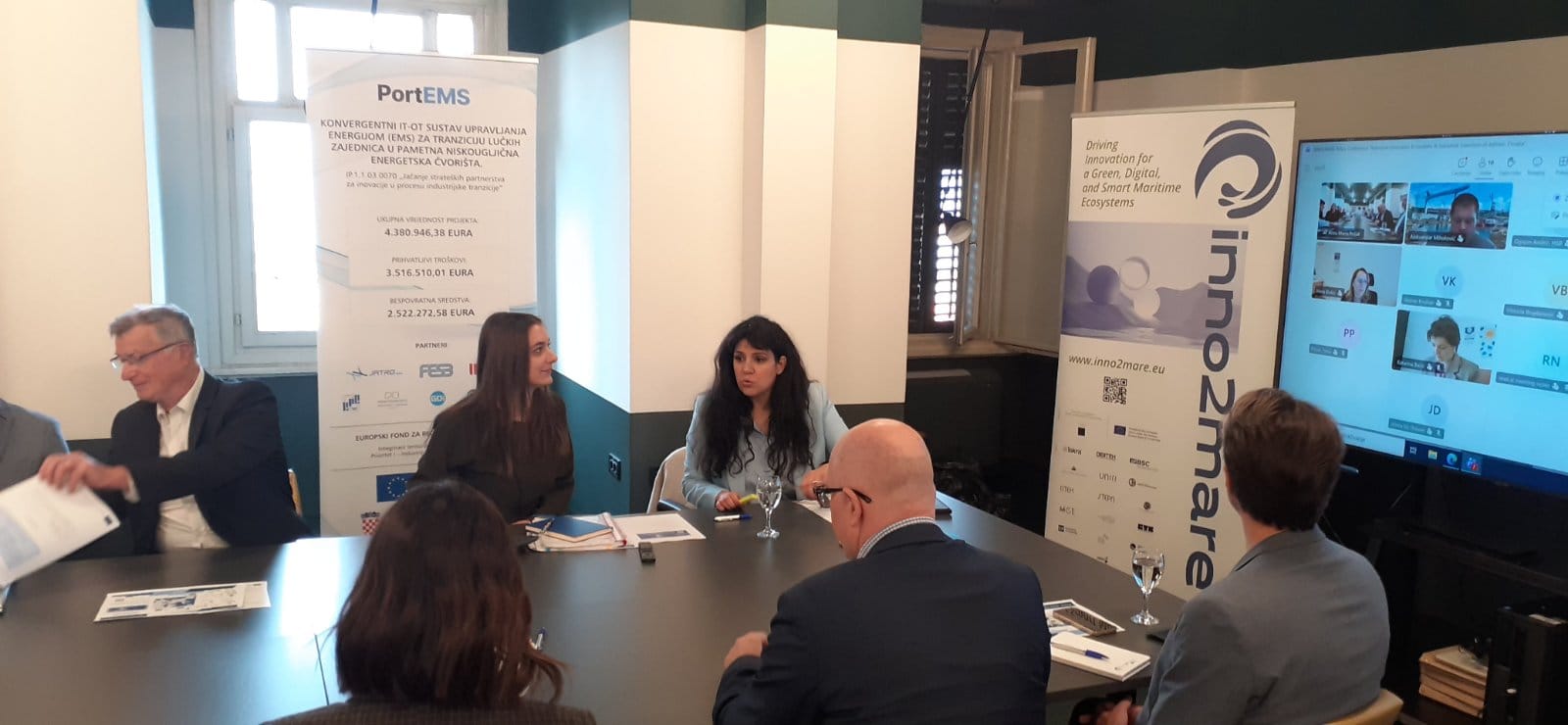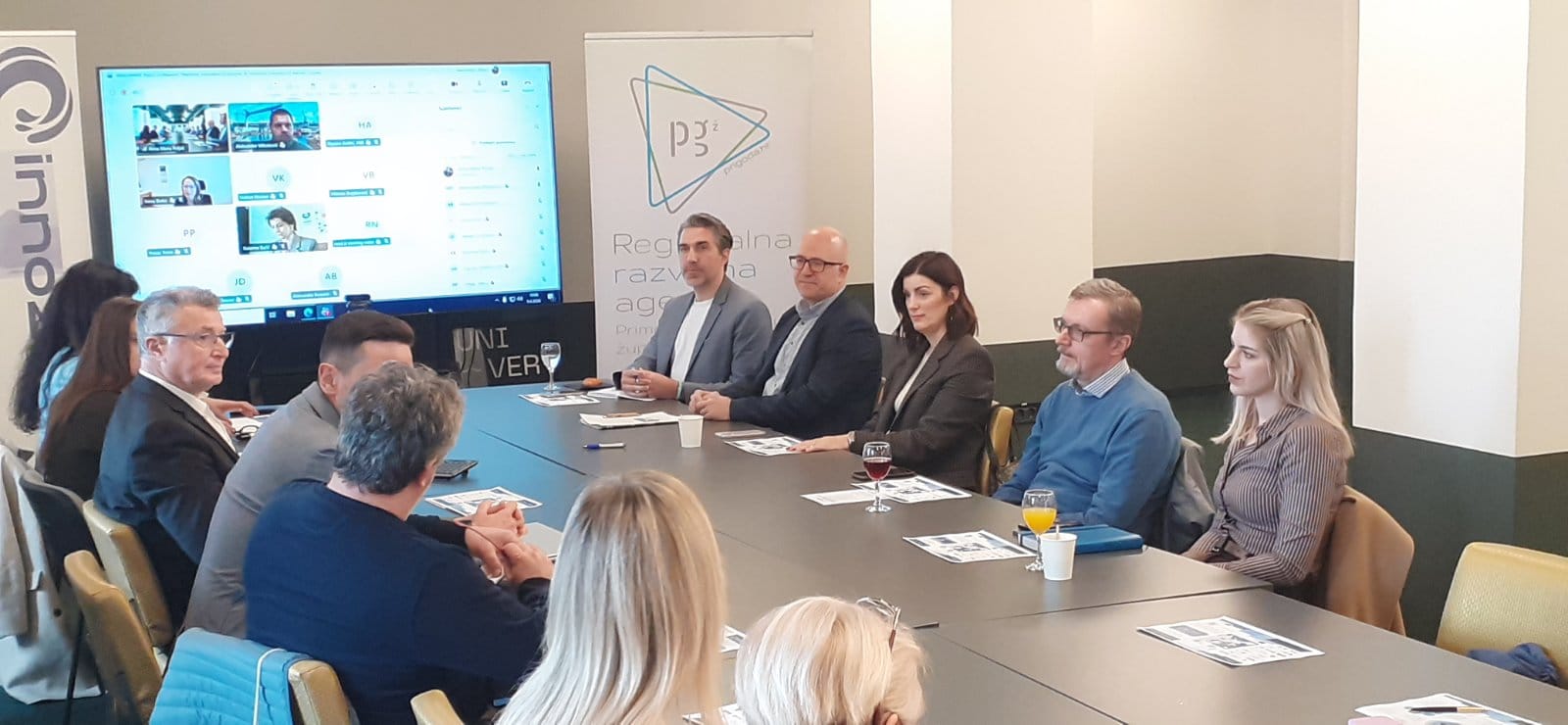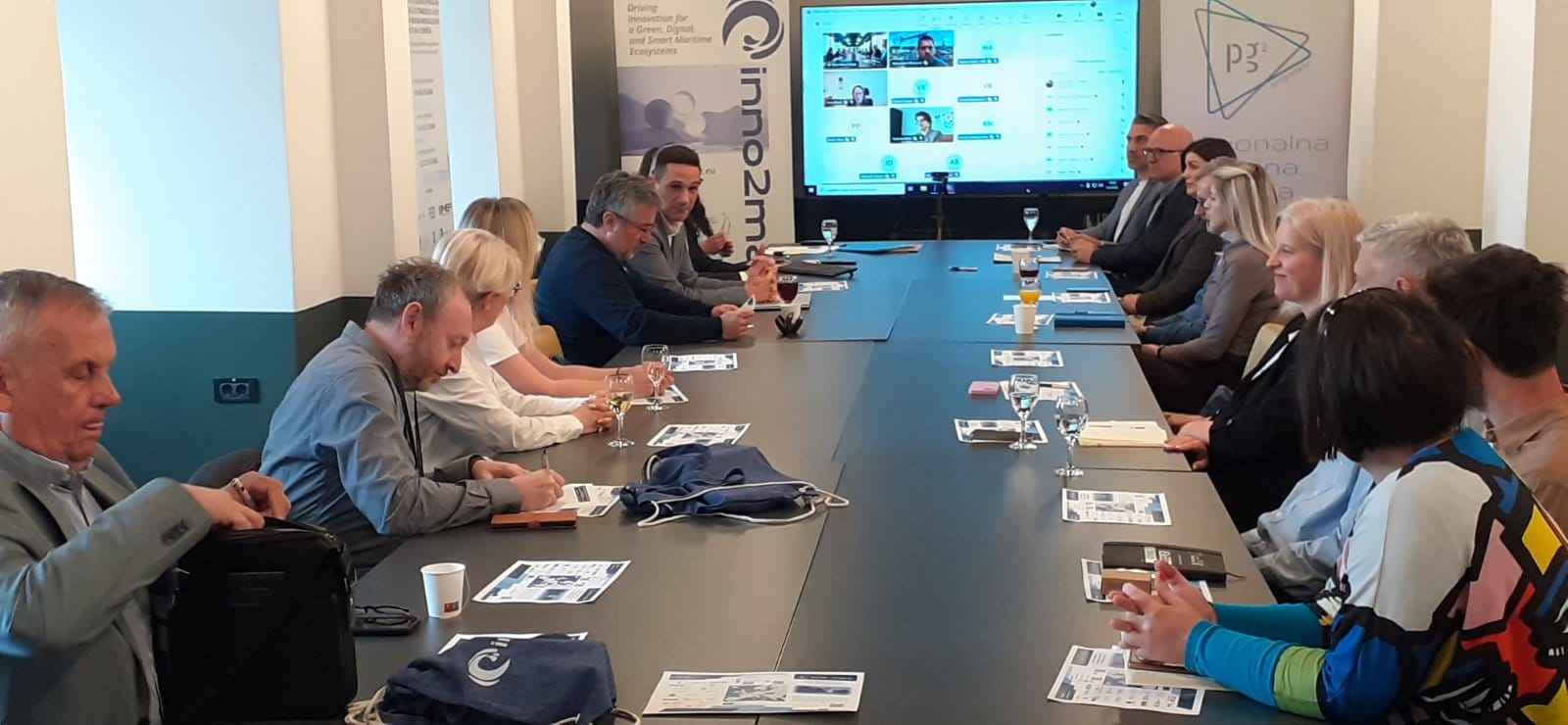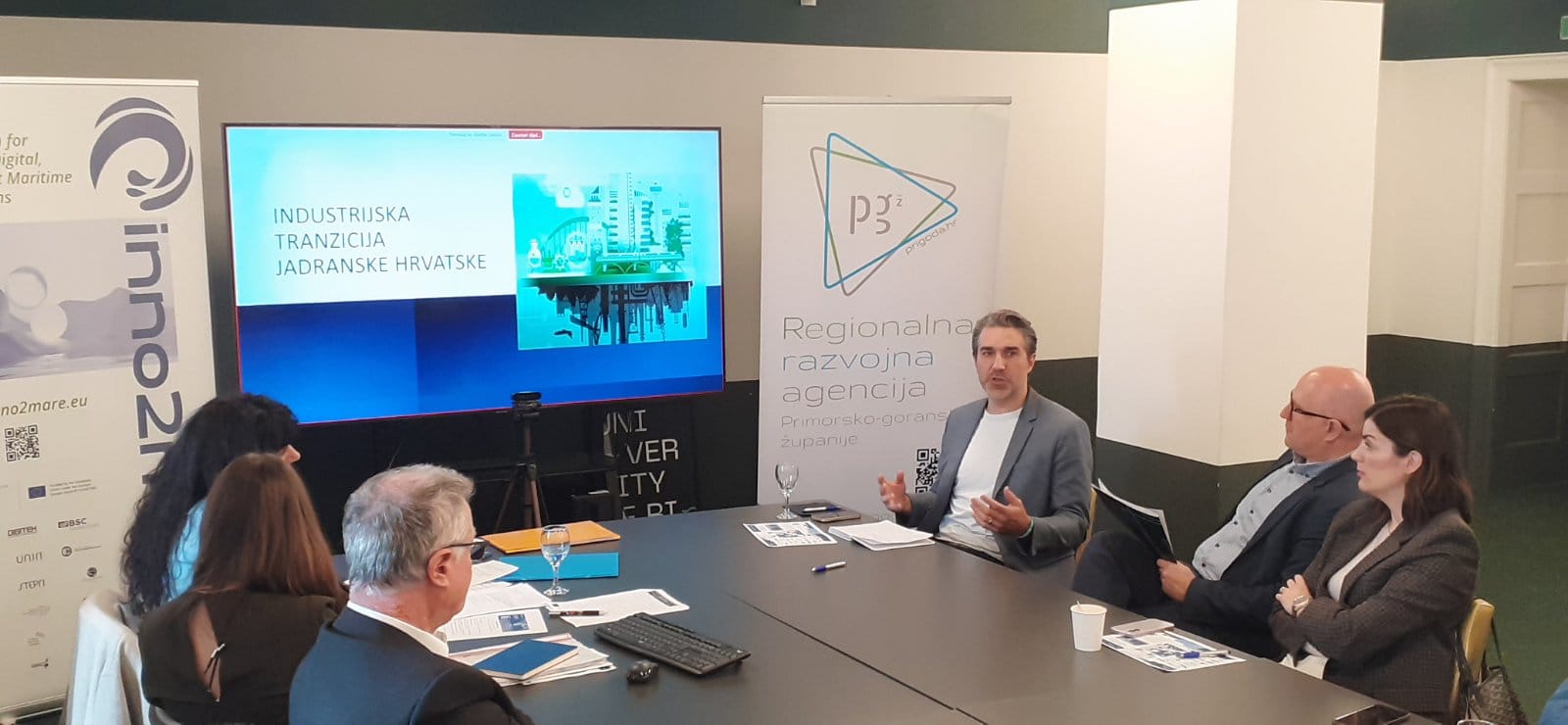
The maritime sector in Adriatic Croatia possesses significant development potential but faces a series of structural challenges that hinder its transformation. At a policy conference held as part of the INNO2MARE project, the Joint R&I Strategy was presented to relevant ministries, with the participation of key stakeholders from industry, academia, and the public sector. The discussion focused on regulation, financing, skills development, and the digital and green transition.
A Hub for Maritime Innovation
The policy conference held last week in Rijeka, organized by the Regional Development Agency of Primorje-Gorski Kotar County (PRIGODA) and the University of Rijeka, served as a central hub for dialogue on maritime innovation. The event brought together representatives from key Croatian ministries—Economy; Regional Development and EU Funds; and Science, Education, and Youth—as well as the County Department for Maritime Domain, Transport, and Communications.
With the support of national and regional authorities, the ambitious Long-term Joint R&I Strategy for Western Slovenia and Adriatic Croatia was unveiled. Developed through project activities, this document establishes a framework for addressing critical sectoral issues, ranging from modernizing regulations and implementing new financing models to digital transformation and aligning workforce skills with market demands.
Strategic Framework and Potential
The conference opened with remarks from Goran Vukelić, Vice-Rector for Strategic Projects at the University of Rijeka, and Vedran Kružić, Director of PRIGODA. Kružić emphasized that recent analyses confirm the maritime sector is one of the region's most vital development assets.
Nikolina Pomenić (PRIGODA) opened the first session by presenting the INNO2MARE project results, highlighting the sector's high productivity, export orientation, and knowledge concentration—particularly in shipbuilding, design, and logistics.
Building on these results, Irena Đokić from the Ministry of Economy presented the INNO2MARE R&I Strategy within the context of the National Industrial Development Plan of the Republic of Croatia. While the strategy provides a roadmap for future growth, its success depends on cross-sector collaboration. The new National Industrial Development Plan, currently under development, offers a prime opportunity to integrate the measures and projects from the INNO2MARE strategy into the national strategic planning framework.
Stjepan Marković from the Ministry of Regional Development and EU Funds followed with a presentation on the Industrial Transition Plan for Adriatic Croatia. He specifically highlighted the need for greater recognition of regional specificities and the role of local development agencies as essential links between entrepreneurs and the public sector.
Overcoming Barriers and Looking Ahead
The second half of the conference shifted to stakeholder perspectives. Darko Jardas from JATRO d.o.o. presented a successful case study of industrial transition in practice. Interactive polling of participants confirmed that regulatory and administrative hurdles remain the greatest barriers to innovation. Furthermore, difficult access to financing continues to limit growth for small and medium-sized enterprises (SMEs), as well as in some instances, larger corporations.
During the roundtable and closing discussion, participants reached a consensus: the digital and green transitions, fueled by advanced technologies such as Artificial Intelligence, are the cornerstones of future competitiveness. Experts noted that while these technologies serve as powerful tools for efficiency and process optimization, they do not replace human expertise; human capital remains the heart of the sector.
Conclusion
A significant shift in industry structure was observed, where business and technological services—such as ICT and engineering—are now indispensable components of the maritime ecosystem. Finally, education was identified as the key element for long-term growth, necessitating stronger ties between educational institutions and the economy to bridge the labor market gap.
The conference confirmed that realizing the innovative potential of Adriatic Croatia’s maritime sector requires a coordinated approach, an improved institutional framework, and continuous investment in people. Through these efforts, the INNO2MARE project is laying the foundation for a more efficient and innovative maritime future of the two cross-border regions.